Journal of Vaccines and Immunology
Towards a Sustainable Cattle Tick Control: An Integrated Vaccination Strategy for Acaricide Resistance Mitigation
1Biotechnology in Health and Environmental Science, Research Lab (BioSA). Autonomous Guerrero State University, Natural Sciences College, Carretera Federal Chilpancingo-Acapulco. Campus Ex-Rancho El “Shalako”, Chilpancingo, Guerrero, C.P. 39105, México
2Immunology and Vaccines Lab. (LINVAs). Natural Sciences College. Autonomous Queretaro State University. Ave. de las Ciencias S/N, Juriquilla, Queretaro, Queretaro. C.P. 76230. Mexico
3Biological Sciences College. Universidad Autónoma del Estado de Morelos, Fac. De Biología, Av. Universidad No. 1001, Col. Chamilpa, Cuernavaca, Morelos, C.P. 62209. México
Author and article information
Cite this as
Dominguez-Garcia DI, et al. Towards a Sustainable Cattle Tick Control: An Integrated Vaccination Strategy for Acaricide Resistance Mitigation. J Vaccines Immunol. 2026; 12(1): 1-7. Available from: 10.17352/jvi.000062
Copyright License
© 2026 Dominguez-Garcia DI, et al. This is an open-access article distributed under the terms of the Creative Commons Attribution License, which permits unrestricted use, distribution, and reproduction in any medium, provided the original author and source are credited.Cattle ticks are among the most economically important ectoparasites affecting livestock production worldwide, causing substantial economic losses through reduced weight gain, decreased milk yield, hide damage, and the transmission of tick-borne diseases, including babesiosis and anaplasmosis. For decades, chemical acaricides have been the cornerstone of tick control programs because of their efficacy and ease of application. However, their extensive and often indiscriminate use has driven the widespread development of acaricide resistance in several tick species, particularly the cattle tick Rhipicephalus (Boophilus) microplus. Resistance to the major classes of acaricides, including organophosphates, synthetic pyrethroids, amidines, macrocyclic lactones, and phenylpyrazoles, has increased production costs, reduced treatment efficacy, and raised significant environmental and public health concerns owing to chemical residues and ecological contamination. These challenges underscore the urgent need for sustainable and integrated tick management strategies.
Anti-tick vaccines have emerged as a promising biological alternative to chemical control by inducing host immune responses against key tick antigens, thereby reducing tick attachment, blood feeding, reproductive fitness, and pathogen transmission. Commercial vaccines based on the Bm86 antigen have demonstrated variable levels of protection across different geographical regions and tick populations. More recently, advances in molecular biology and omics technologies, including vaccinomics and vaccinomics-guided antigen discovery, have accelerated the identification of novel vaccine candidates with the potential to provide broader and more effective protection. Nevertheless, vaccination alone is unlikely to eliminate tick infestations and should therefore be implemented as a component of an integrated tick management strategy.
Sustainable control of cattle ticks requires a multifaceted approach that integrates the strategic use of acaricides, anti-tick vaccination, biological control, pasture management, host genetic resistance, and routine surveillance of acaricide resistance. Such integrated tick management strategies reduce selection pressure for resistance, improve animal health and productivity, minimize environmental impacts, and promote sustainable livestock production. Continued research aimed at developing next-generation vaccines and innovative resistance management approaches will be critical for achieving effective, durable, and environmentally sustainable control of cattle ticks worldwide.
IPM: Integrated Pest Management; PCR: Polymerase Chain Reaction; TBP: Tick-Borne Pathogens; TBD: Tick-Borne Diseases; USD: United States Dollar; AI: Artificial Intelligence
Introduction
Ticks are among the most important vectors of pathogens affecting both wild and domestic animals, transmitting a wide range of infectious agents that cause diseases of major veterinary and public health importance [1]. Among these, the cattle tick Rhipicephalus microplus is one of the most economically significant ectoparasites of livestock. It is widely distributed throughout tropical and subtropical regions, where it causes substantial production losses through direct blood feeding and by transmitting pathogens responsible for economically important diseases such as babesiosis and anaplasmosis [2,3].
The control of R. microplus remains a major challenge, particularly in emerging economies across Latin America, where livestock production represents a critical component of agricultural development. Chemical acaricides have long been the primary method for tick control because of their high efficacy and ease of application [4]. However, the intensive and often indiscriminate use of these compounds, together with the remarkable adaptive capacity of tick populations, has driven the widespread emergence of resistance to multiple acaricide classes [5]. In many regions, multidrug-resistant tick populations have become increasingly prevalent, reducing the effectiveness of conventional control programs. Moreover, excessive acaricide use has generated important environmental and public health concerns, including soil and groundwater contamination, adverse effects on non-target arthropods, and chemical residues in animal-derived products such as milk and meat intended for human consumption [6].
The rapid evolution of acaricide resistance has highlighted the limitations of relying exclusively on chemical control. In particular, the repeated use of commercial acaricide mixtures has accelerated the selection of multidrug-resistant tick populations [5]. Consequently, the effective lifespan of several acaricide compounds has been markedly reduced in some regions of northern Mexico, where they no longer provide satisfactory tick control. These limitations have stimulated the search for sustainable alternatives, including the identification of novel immunogenic molecules for the development of anti-tick vaccines [7].
Recent advances in omics technologies, including bioinformatics, genomics, transcriptomics, proteomics, and vaccinomics, have accelerated the discovery of novel vaccine candidates with the potential to provide broader and more durable protection against cattle ticks [8-10]. Nevertheless, vaccination alone is unlikely to eliminate tick infestations. Effective and sustainable control requires an integrated management strategy that combines the strategic use of acaricides, anti-tick vaccination, biological control agents, pasture management, host genetic resistance, and continuous surveillance of acaricide resistance [4,11]. Such integrated tick management programs reduce selection pressure for acaricide resistance, improve animal health and productivity, minimize environmental impacts, and enhance the long-term sustainability of livestock production [12,13]. Future research should prioritize the development of next-generation vaccines, rapid diagnostic tools for resistance monitoring, and precision-based tick control strategies to ensure effective, sustainable, and environmentally responsible management of cattle ticks [9,14].
The implementation of integrated pest management programs can substantially reduce tick population densities and consequently decrease the incidence and mortality associated with tick-borne diseases, including babesiosis and anaplasmosis [15]. By integrating complementary control measures, these programs contribute to the development of a more sustainable and environmentally responsible livestock industry while promoting the production of safe, high-quality animal-derived food products with reduced chemical residues [16].
The primary objective of this review is to present a proposal with the intention that it may serve as a platform for future consideration for the development of Integrated Tick management programs as a strategy to address the problem of tick control. This is particularly important because more than 50% of the Mexican territory is infested with the cattle tick, Rhipicephalus microplus.
A systematic review of the literature was conducted to analyze and strengthen the concept of a potential solution based on a comprehensive integrated vaccination strategy aimed at reducing not only tick populations, but also the use of acaricides, environmental impact, vector-borne diseases, and promotion of safe food production in Mexico.
The literature review was conducted using the following inclusion criteria: technical and scientific documents published in indexed journals, FAO reports, or publications directly related to the subject of this manuscript. The search was performed using the keywords "tick vaccines" and "integrated tick control", with preference given to recent publications. In addition, presentations delivered by members of the research group at national conferences in Mexico were included when relevant.
Biological and Economic Importance of Rhipicephalus microplus
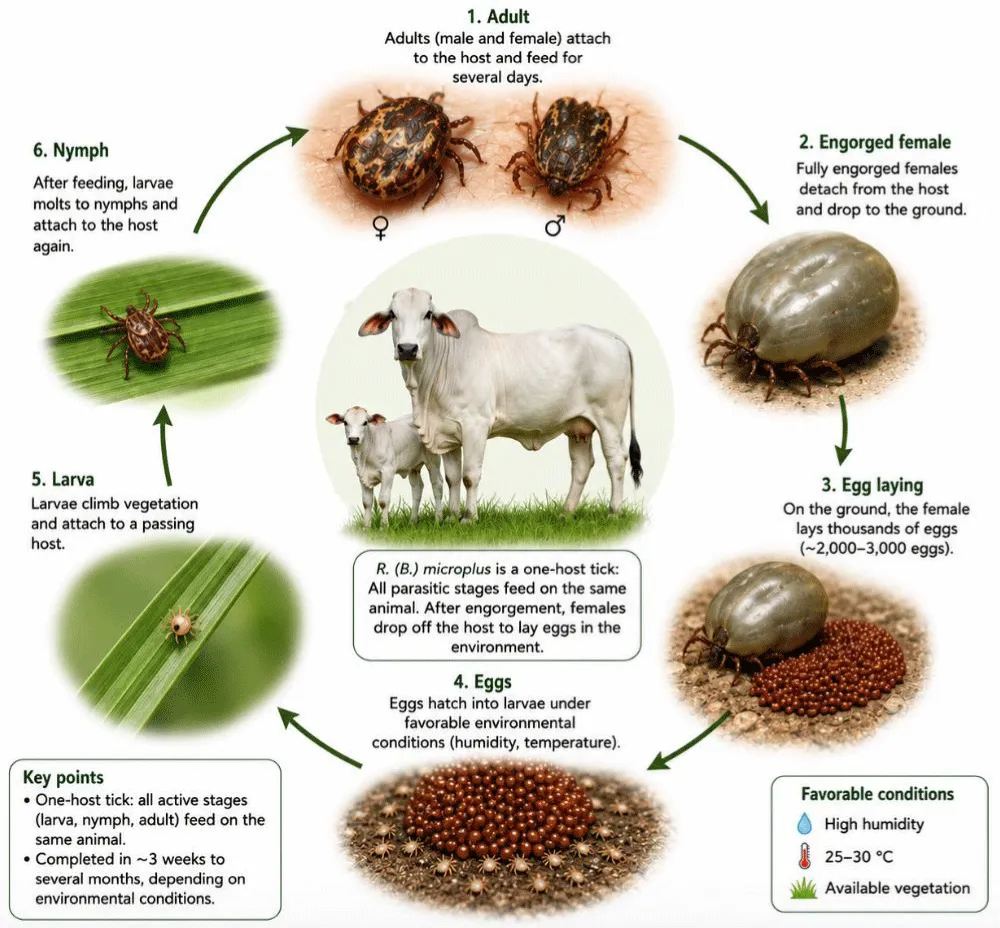
The cattle tick R. microplus is a one-host tick whose entire parasitic life cycle is completed on a single bovine host. Following attachment, the larval, nymphal, and adult stages develop sequentially on the same animal. After engorgement, adult females detach from the host and oviposit in the environment, where eggs hatch into larvae that actively seek a new host to initiate the next parasitic cycle. This highly efficient life cycle enables rapid population growth under favorable environmental conditions (Figure 1) [2,17].
R. microplus is one of the most economically important ectoparasites of cattle worldwide. Infestations reduce meat and milk production, impair fertility and reproductive performance, damage hides and consequently reduce leather quality, and increase production costs associated with tick control and the treatment of tick-borne diseases. In addition, R. microplus is the principal vector of pathogens responsible for bovine babesiosis and anaplasmosis, diseases that impose substantial economic losses on the livestock industry [12,18,19]. The impact of tick infestations is particularly severe in developing countries, where livestock production represents a major source of income, food security, and rural livelihoods [1,9].
Acaricides resistance and anti-tick vaccines
Ticks and tick-borne diseases represent a major global challenge for animal health, livestock production, and food security. The expansion of international trade, globalization of livestock production systems, and increased movement of animals and animal-derived products have facilitated the dissemination of ticks and tick-borne pathogens across geographical regions, increasing the risk of disease emergence and transboundary transmission [20].
Chemical acaricides remain the primary tool for controlling tick infestations; as a consequence, their intensive and often indiscriminate use has driven the widespread emergence of resistance to multiple classes of commercially available acaricides, compromising the effectiveness of conventional tick control programs [11,21]. The increasing prevalence of multidrug-resistant tick populations has intensified the search for sustainable alternatives that reduce reliance on chemical control while maintaining effective suppression of tick infestations.
At this point, it is important to review how a vaccination-based control strategy can help to delay or mitigate the development of acaricide resistance. Acaricides are widely used to control ticks and other arthropod pests in agriculture and livestock production. However, their extensive use is associated with adverse effects on animal and human health, as well as environmental contamination and food safety concerns, due to their residual toxicity and diverse mechanisms of action [11]. Some acaricide classes, particularly organophosphates and carbamates, inhibit acetylcholinesterase and can be highly toxic to humans and wildlife because they target the nervous system [22].
As discussed above, the primary role of anti-tick vaccines is to reduce the reliance on chemical acaricides and thereby mitigate or delay the emergence of acaricide resistance [8]. One of the most significant benefits of vaccination is the substantial reduction in the number of acaricide applications, from 14 to 2.8 annual treatments (Table 2); this reduction decreases the selection pressure exerted on tick populations, thereby slowing the evolution and spread of acaricide-resistant individuals.
Consequently, considerable research efforts in Mexico and worldwide have focused on identifying novel tick control strategies, including plant-derived compounds with acaricidal activity [23] and recombinant antigens for the development of anti-tick vaccines targeting Rhipicephalus microplus [24]. Vaccination has emerged as a promising and environmentally sustainable approach for controlling cattle ticks by improving animal health, reducing dependence on chemical acaricides, minimizing environmental contamination, and promoting the production of safe animal-derived food products with minimal chemical residues [25].
The discovery of novel protective antigens has been greatly accelerated by advances in Molecular Biology and high-throughput 'omics' technologies, particularly bioinformatics, functional genomics, transcriptomics, proteomics, and reverse vaccinology [26]. In R. microplus, the integration of these multidisciplinary approaches has transformed vaccine discovery by enabling genome-wide identification and characterization of protective candidate antigens. These advances have not only expanded the repertoire of vaccine candidates but have also facilitated the development of innovative diagnostic tools and next-generation recombinant vaccines with the potential to improve the long-term control of cattle tick infestations [27].
Collectively, these advances have established anti-tick vaccination as a key component of integrated tick management strategies, complementing chemical, biological, and genetic control approaches to achieve sustainable control of R. microplus.
Historical development of anti-tick vaccines
During the pre-genomic era, vaccine development relied primarily on the use of live, attenuated, or inactivated pathogens, as well as subunit vaccines produced from proteins purified from whole-organism extracts [28]. These subunit formulations often contained one or more antigenic proteins capable of eliciting protective immune responses. A critical step in the development of such vaccines was the identification and purification of immunoprotective antigens while eliminating non-protective or irrelevant components. To be considered a suitable vaccine candidate, an antigen must induce an immune response capable of impairing the survival, development, feeding, or reproductive fitness of the target pathogen or parasite following subsequent exposure [29].
The traditional empirical approach to subunit vaccine development involves several sequential steps: (i) culturing or obtaining sufficient quantities of the target parasite, pathogen, or pest; (ii) isolating and characterizing its molecular components; (iii) identifying and purifying antigens with desirable immunogenic properties; and (iv) evaluating their protective efficacy through experimental challenge studies in an appropriate animal model [30,31]. Although this strategy has led to the successful development of several vaccines, it is labor-intensive, time-consuming, and highly dependent on the availability of sufficient biological material.
Moreover, the empirical approach presents several inherent limitations. The identification and purification of antigens with optimal immunoprotective properties are technically challenging, particularly for organisms that cannot be readily cultured or maintained under laboratory conditions, thereby restricting vaccine production and antigen discovery [32]. In addition, the most abundant proteins are not necessarily the most protective, and antigen expression profiles may differ substantially between organisms grown in vitro and those developing under natural infection conditions. Consequently, potentially relevant protective antigens may be overlooked using conventional protein-based discovery approaches. Although these limitations are less pronounced in ticks than in many microbial pathogens, they nevertheless underscore the need for more comprehensive antigen discovery strategies based on genomics, transcriptomics, proteomics, and reverse vaccinology [33].
From reverse vaccines to an integrated management program
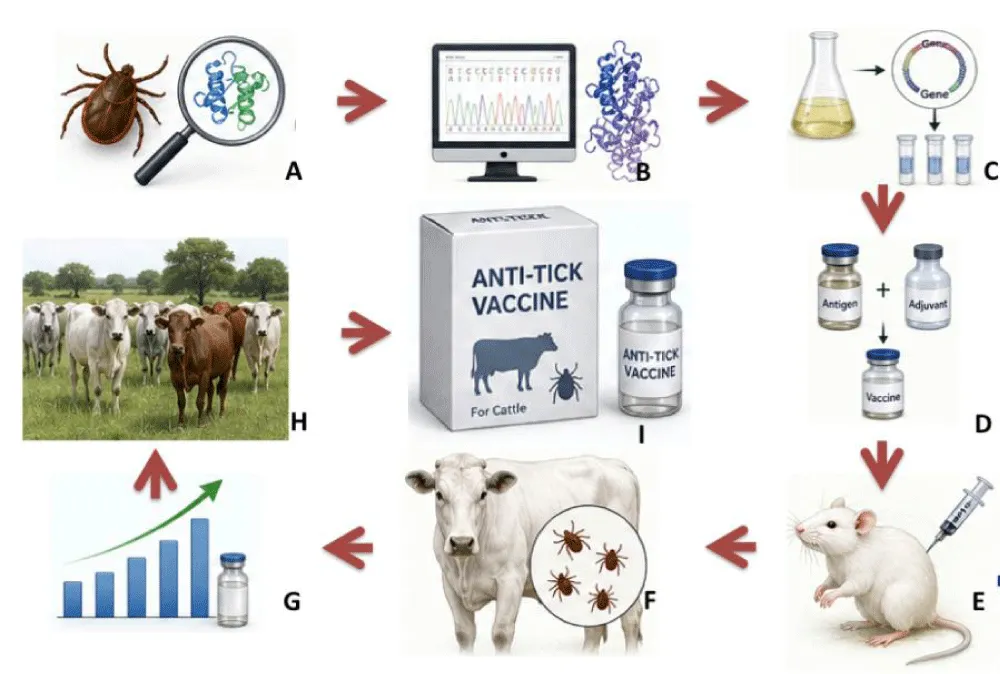
The post-genomic era has transformed pathogen research by enabling genome-wide approaches for the identification of targets relevant to human and veterinary health. Among these, reverse vaccinology has emerged as a powerful strategy that exploits genomic sequence data deposited in public databases to identify candidate vaccine antigens through in silico analyses, thereby accelerating vaccine discovery [26,1].
The identification of novel vaccine candidates typically begins with the in silico analysis of genomic data from the organism of interest. Using specialized bioinformatics tools, protein-coding genes can be functionally annotated and screened to predict antigenic sequences with potential for vaccine development [34]. Candidate genes are subsequently amplified by polymerase chain reaction (PCR), an in vitro nucleic acid amplification technique widely used for molecular cloning, recombinant protein expression, and downstream experimental validation. PCR products derived from genomic DNA or cDNA templates are cloned into appropriate expression vectors, which are selected according to the objectives of the study and the intended expression system.
A major advantage of this strategy is that it circumvents the need to culture or maintain the pathogen during the initial stages of antigen discovery, substantially reducing the time, labor, and cost associated with conventional vaccine development. Nevertheless, the success of reverse vaccinology depends largely on the accuracy of computational algorithms used to predict antigenic epitopes [35]. Despite continuous improvements in bioinformatics, antigen prediction remains challenging because proteins with similar structural or functional properties may exhibit limited sequence conservation. Conversely, antigenic epitopes may be encoded by subtle sequence features that cannot be identified through sequence similarity searches alone, limiting the discovery of novel vaccine candidates with no detectable homology to previously characterized antigens [36]. Ongoing advances in comparative genomics, structural bioinformatics, and machine learning-based prediction algorithms are progressively overcoming these limitations, thereby improving the accuracy and efficiency of reverse vaccinology pipelines.
Perspectives of anti-tick vaccines
The development of vaccines against ticks represents a promising and sustainable strategy for tick control, offering an effective alternative to conventional acaricide-based approaches. Anti-tick vaccines have the potential to improve animal health and welfare, reduce environmental contamination associated with acaricide use, decrease the incidence of tick-borne diseases, and enhance the safety and sustainability of cattle production systems [5,6].
Historically, efforts to identify protective tick antigens have focused primarily on proteins involved in the host-parasite interface. Many of these antigens have recently been rediscovered through proteomic analyses of tick saliva, which have provided valuable insights into the molecular mechanisms governing tick feeding and host immune modulation [37]. However, although these studies have improved our understanding of tick-host interactions, the identification of biologically relevant molecules has not consistently translated into the discovery of protective antigens. Natural tick infestations generally induce detectable immunity only after repeated, heavy exposure, and the resulting immune response provides limited protection against subsequent infestations.
To date, the greatest success in anti-tick vaccine development has been achieved using concealed antigens derived from the tick midgut, particularly membrane-associated proteins expressed by intestinal epithelial cells. The best-known examples are the commercial vaccines TickGARD and Gavac, both based on homologous variants of the Bm86 antigen identified from Australian and Cuban strains of Rhipicephalus microplus, respectively [38-40]. In Argentina, a closely related variant, designated Bm95, was developed to improve vaccine performance against tick populations that exhibited reduced susceptibility to immunization with the original Bm86-based vaccine [41,42]. Subsequent investigations demonstrated that these differences in vaccine efficacy were associated with polymorphisms within the Bm86 gene, highlighting the influence of antigenic diversity on vaccine performance [42,43].
Initial studies suggested that Bm95 represents a broadly protective antigen capable of overcoming the limitations of Bm86-based vaccines across genetically diverse tick populations [44,45]. However, subsequent molecular analyses demonstrated that the improved efficacy was primarily attributable to the use of a native antigen closely matched to the circulating local tick population. Comparative sequence analyses confirmed that Bm95 and Bm86 are allelic variants of the same gene, differing only by naturally occurring polymorphisms [44,31]. These findings emphasize the importance of accounting for antigenic diversity among geographically distinct tick populations, as sequence variation can substantially influence vaccine efficacy. Consequently, the development of vaccines based on native or region-specific antigens may represent an effective strategy for maximizing protection against local tick populations.
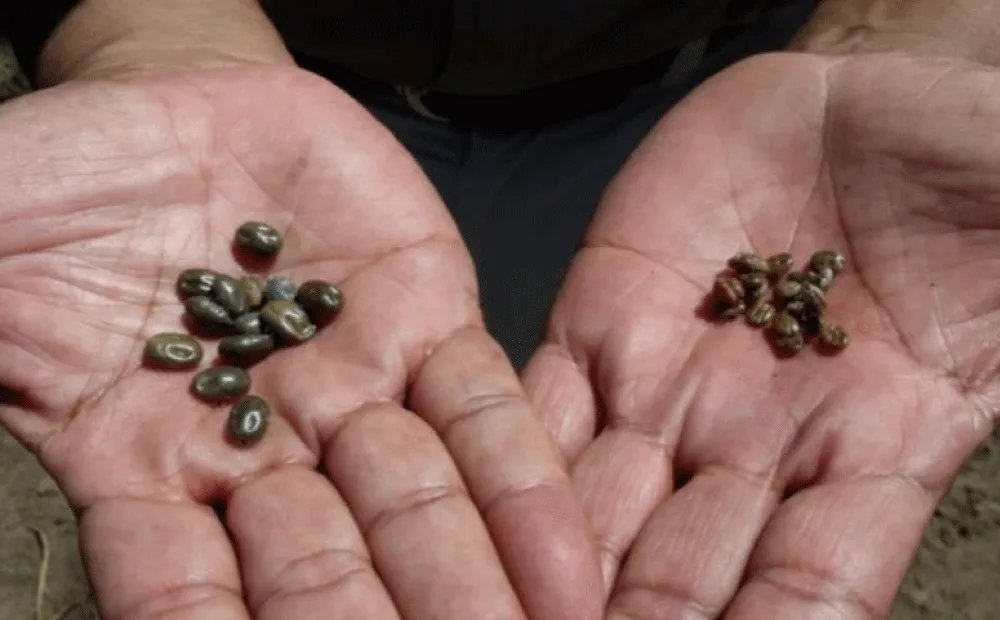
This concept was supported by a field trial conducted in Mexico using a vaccine formulated with a locally derived Bm86 antigen [46]. Vaccinated cattle exhibited significant reductions in tick size, body weight, and reproductive performance compared with non-vaccinated controls (Figure 3). Mean tick body weight decreased from 166 to 25.85 mg, representing an 84% reduction (Table 1 above), whereas total egg mass production was reduced by up to 86% (P < 0.05), demonstrating a marked impairment of tick reproductive fitness [46].
Implementation of the vaccination strategy as part of an Integrated Pest Management (IPM) program also generated substantial economic benefits. Surveys conducted before and after IPM implementation revealed that the average number of acaricide treatments decreased from 14 to 3 applications per year, while the interval between acaricide treatments increased from 27 to 155 days. Consequently, the annual cost of chemical tick control, calculated in Mexican pesos, declined from to $15978.00 MX to $2665.00 MX per animal (this reduction cost is only due to acaricides costs), by using an integrated vaccination strategy (combined chemical control and vaccination), corresponding to an overall costs reduction on acaricides aplications, of approximately 83% (Table 2 above) [47]. These findings demonstrate that integrating vaccination with conventional tick management strategies can substantially reduce acaricide dependence while improving the economic sustainability of cattle production.
Conclusion
Advances in genomics and bioinformatics have enabled the exploitation of gene sequences available in public databases for the biotechnological development of novel recombinant vaccines through genetic engineering, as well as the optimization of existing vaccine formulations. Furthermore, the development of vaccines based on locally circulating tick strains is expected to play a pivotal role in improving the efficacy of integrated pest management (IPM) strategies in the near future.
Significant progress has been made in tick vaccine research. An increasing number of tick genes have been cloned and characterized, and experimental studies have demonstrated the potential of antigens such as Bm86, subolesin, ferritin, aquaporin, and a growing repertoire of orthologous proteins as effective targets for tick control. The continued discovery of novel protective antigens suggests that the development of next-generation tick vaccines is becoming increasingly feasible.
Despite these advances, tick control remains a major challenge for governments and the scientific community in Mexico and worldwide. Anti-tick vaccines are widely recognized as a promising, practical, and sustainable alternative to conventional acaricide-based control strategies. Their implementation has the potential to improve animal health, reduce environmental contamination, and protect public health by supporting the production of safe animal-derived food products with minimal acaricide residues.
Furthermore, integrated vaccination strategies and complementary tick control measures can substantially reduce tick populations and consequently, the transmission of tick-borne pathogens. This reduction is expected to lower the incidence and mortality associated with diseases such as babesiosis and anaplasmosis while supporting sustainable livestock production, environmental protection, and food safety through decreased reliance on chemical acaricides and reduced pesticide residues.
Acknowledgement
The authors gratefully acknowledge the Guerrero State Mixed Funds Program (Programa de Fondos Mixtos del Estado de Guerrero) and the Fundación Produce Guerrero for the financial support provided for the execution of this study through Grant Agreement No. 92367, awarded to Dr. Rodrigo Rosario-Cruz and Dra. Delia Ines Dominguez Garcia. We also extend our sincere appreciation to the regional and local cattle producers associations of Coyuca de Benitez, Cuajinicuilapa, and Ciudad Altamirano, Guerrero, as well as to the livestock producers who participated in this study.
Author manuscript contributions
Writing original draft: R.R.C., C.A.G., D.I.D.G., F.R.D. Writing, reviewing, and editing: R.R.C., C.A.G., D.I.D.G., F.R.D. Conceptualization: R.R.C., C.A.G., D.I.D.G. Artwork: D.I.D.G., F.R.D. All authors have read and agreed to submit this version of the manuscript.
- Estrada-Peña A, Venzal JM, Kocan KM, Sonenshine DE. Overview: ticks as vectors of pathogens that cause disease in humans and animals. Front Biosci. 2008;13:6938-6946. Available from: https://doi.org/10.2741/3200
- Estrada-Peña A, García Z, Sánchez HF. The distribution and ecological preferences of Boophilus microplus (Acari: Ixodidae) in Mexico. Exp Appl Acarol. 2006;38(4):307-316. Available from: https://doi.org/10.1007/s10493-006-7251-2
- Merino O, Almazán C, Canales M, Villar M, Moreno-Cid JA, et al. Control of Rhipicephalus (Boophilus) microplus infestations by the combination of subolesin vaccination and tick autocidal control after subolesin gene knockdown in ticks fed on cattle. Vaccine. 2011;29(12):2248-2254. Available from: https://doi.org/10.1016/j.vaccine.2011.01.050
- George JE, Pound JM, Davey RB. Chemical control of ticks on cattle and the resistance of these parasites to acaricides. Parasitology. 2004;129(Suppl):S353-S366. Available from: https://doi.org/10.1017/s0031182003004682
- Rosario-Cruz R, Almazán C, Miller RJ, Domínguez-García DI, Hernández-Ortiz R, et al. Genetic basis and impact of tick acaricide resistance. Front Biosci. 2009;14:2657-2665. Available from: https://doi.org/10.2741/3403
- Domínguez-García DI, Rosario-Cruz R, Saltijeral JA, de la Fuente J, Almazán C. Boophilus microplus: aspectos biológicos y moleculares de la resistencia a los acaricidas y su impacto en la salud animal. Trop Subtrop Agroecosyst. 2010;12(2):181-192.
- Almazán C, Lagunes R, Villar M, Canales M, Rosario-Cruz R, et al. Identification and characterization of Rhipicephalus (Boophilus) microplus candidate protective antigens for the control of cattle tick infestations. Parasitol Res. 2010;106(2):471-479. Available from: https://doi.org/10.1007/s00436-009-1689-1
- de la Fuente J, Contreras M. Tick vaccines: current status and future directions. Expert Rev Vaccines. 2015;14(10):1367-1376. Available from: doi:10.1586/14760584.2015.1076339
- Lew-Tabor AE, Rodriguez Valle M. A review of reverse vaccinology approaches for the development of vaccines against ticks and tick-borne diseases. Ticks Tick Borne Dis. 2016;7(4):573-585. Available from: doi:10.1016/j.ttbdis.2015.12.012.
- Parizi LF, Pohl PC, Masuda A, Vaz Junior IDS. New approaches toward anti-Rhipicephalus (Boophilus) microplus tick vaccine. Rev Bras Parasitol Vet. 2009;18:1-7. Available from: https://pubmed.ncbi.nlm.nih.gov/19500453/
- Abbas RZ, Zaman MA, Colwell DD, Gilleard J, Iqbal Z. Acaricide resistance in cattle ticks and approaches to its management: the state of play. Vet Parasitol. 2014;203(1-2):6-20. Available from: https://doi.org/10.1016/j.vetpar.2014.03.006
- Jonsson NN. The productivity effects of cattle tick (Boophilus microplus) infestation on cattle, with particular reference to Bos indicus cattle and their crosses. Vet Parasitol. 2006;137(1-2):1-10. Available from: https://doi.org/10.1016/j.vetpar.2006.01.010
- de la Fuente J, Contreras M, Estrada-Peña A, Cabezas-Cruz A, Kocan KM. Targeting a global health problem: vaccine design and challenges for the control of tick-borne diseases. Vaccine. 2017;35(38):5089-5094. Available from: https://doi.org/10.1016/j.vaccine.2017.07.097
- Guerrero FD, Andreotti R, Bendele KG, Cunha RC, Miller RJ, Yeater K, Pérez de León AA. Rhipicephalus (Boophilus) microplus aquaporin as an effective vaccine antigen to protect against cattle tick infestations. Parasit Vectors. 2014;7(1):475. Available from: https://doi.org/10.1186/s13071-014-0475-9
- Quiroz-Castañeda RE, Amaro-Estrada I, Rodríguez-Camarillo SD. Anaplasma marginale: diversity, virulence, and vaccine landscape through a genomics approach. Biomed Res Int. 2016;2016:9032085. Available from: doi:10.1155/2016/9032085.
- Webster A, Reck J, Santi L, Souza UA, Dall'Agnol B, et al. Integrated control of an acaricide-resistant strain of the cattle tick Rhipicephalus microplus by applying Metarhizium anisopliae associated with cypermethrin and chlorpyriphos under field conditions. Vet Parasitol. 2015;207(3-4):302-308. Available from: https://doi.org/10.1016/j.vetpar.2014.11.021
- Sonenshine DE, Roe RM, editors. Biology of Ticks. Vol. 2. Oxford: Oxford University Press; 2014.
- Ghosh S, Bansal GC, Gupta SC, Ray D, Khan MQ, et al. Status of tick distribution in Bangladesh, India and Pakistan. Parasitol Res. 2007;101(Suppl 2):S207-S216. Available from: https://doi.org/10.1007/s00436-007-0684-7
- Grisi L, Leite RC, Martins JRS, Barros ATM, Andreotti R, et al. Reassessment of the potential economic impact of cattle parasites in Brazil. Rev Bras Parasitol Vet. 2014;23(2):150-156. Available from: https://doi.org/10.1590/s1984-29612014042
- Food and Agriculture Organization of the United Nations. Resistencia a los antiparasitarios: estado actual con énfasis en América Latina. Serie Producción Animal y Sanidad Animal No. 157. Rome: FAO; 2003. 51 p.
- Vudriko P, Okwee-Acai J, Tayebwa DS, Byaruhanga J, Kakooza S, et al. Emergence of multi-acaricide resistant Rhipicephalus ticks and its implication on chemical tick control in Uganda. Parasit Vectors. 2016;9(1):4. Available from: https://doi.org/10.1186/s13071-015-1278-3
- Costa LG. Current issues in organophosphate toxicology. Clin Chim Acta. 2006;366(1-2):1-13. Available from: https://doi.org/10.1016/j.cca.2005.10.008
- Martínez VM, Rosario-Cruz R, Castillo Herrera G, Flores Fernández JM, Álvarez AH, et al. Acaricidal effect of essential oils from Lippia graveolens (Lamiales: Verbenaceae), Rosmarinus officinalis (Lamiales: Lamiaceae), and Allium sativum (Liliales: Liliaceae) against Rhipicephalus (Boophilus) microplus (Acari: Ixodidae). J Med Entomol. 2011;48(4):822-827. Available from: https://doi.org/10.1603/me10140
- Prudencio CR, Marra AO, Cardoso R, Goulart LR. Recombinant peptides as new immunogens for the control of the bovine tick, Rhipicephalus (Boophilus) microplus. Vet Parasitol. 2010;172(1-2):122-131. Available from: https://doi.org/10.1016/j.vetpar.2010.04.012
- Domingos A, Antunes S, Borges L, Rosário VE. Approaches towards tick and tick-borne diseases control. Rev Soc Bras Med Trop. 2013;46(3):265-269. Available from: https://doi.org/10.1590/0037-8682-0014-2012
- Jensen K, de Miranda Santos IK, Glass EJ. Using genomic approaches to unravel livestock (host)-tick-pathogen interactions. Trends Parasitol. 2007;23(9):439-444. Available from: https://doi.org/10.1016/j.pt.2007.07.006
- Kongsuwan K, Josh P, Zhu Y, Pearson R, Gough J, et al. Exploring the midgut proteome of partially fed female cattle tick Rhipicephalus (Boophilus) microplus. J Insect Physiol. 2010;56(2):212-226. Available from: https://doi.org/10.1016/j.jinsphys.2009.10.003
- Kay BH, Kemp DH. Vaccines against arthropods. Am J Trop Med Hyg. 1994;50(6 Suppl):87-96. Available from: https://doi.org/10.4269/ajtmh.1994.50.87
- Willadsen P. Antigen cocktails: valid hypothesis or unsubstantiated hope? Trends Parasitol. 2008;24(4):164-167. Available from: https://doi.org/10.1016/j.pt.2008.01.005
- Mulenga A, Sugimoto C, Onuma M. Issues in tick vaccine development: identification and characterization of potential candidate vaccine antigens. Microbes Infect. 2000;2(11):1353-1361. Available from: https://doi.org/10.1016/s1286-4579(00)01289-2
- Willadsen P. Anti-tick vaccines. Parasitology. 2004;129(Suppl):S367-S387. Available from: https://doi.org/10.1017/s0031182003004657
- Willadsen P. Tick control: thoughts on a research agenda. Vet Parasitol. 2006;138(1-2):161-168. Available from: https://doi.org/10.1016/j.vetpar.2006.01.050
- Nuttall PA, Trimnell AR, Kazimirova M, Labuda M. Exposed and concealed antigens as vaccine targets for controlling ticks and tick-borne diseases. Parasite Immunol. 2006;28(4):155-163. Available from: https://doi.org/10.1111/j.1365-3024.2006.00806.x
- Prudencio CR, Nascimento R, Filho MM, Marra AO, de Souza GR, et al. In silico analysis for identification of tick phagotopes selected by phage-displayed libraries. Rev Bras Parasitol Vet. 2009;18(1):39-41. Available from: https://pubmed.ncbi.nlm.nih.gov/19500459/
- Andreotti R, Pedroso MS, Caetano AR, Martins NF. Comparison of predicted binders in Rhipicephalus (Boophilus) microplus intestine protein variants Bm86 Campo Grande strain, Bm86 and Bm95. Rev Bras Parasitol Vet. 2008;17(2):93-98. Available from: https://doi.org/10.1590/s1984-29612008000200006
- Freeman JM, Davey RB, Kappmeyer LS, Kammlah DM, Olafson PU. Bm86 midgut protein sequence variation in South Texas cattle fever ticks. Parasit Vectors. 2010;3:101. Available from: https://doi.org/10.1186/1756-3305-3-101
- Zivkovic Z, Esteves E, Almazán C, Daffre S, Nijhof AM, et al. Differential expression of genes in salivary glands of male Rhipicephalus (Boophilus) microplus in response to infection with Anaplasma marginale. BMC Genomics. 2010;11:186. Available from: https://doi.org/10.1186/1471-2164-11-186
- Willadsen P, Bird P, Cobon GS, Hungerford J. Commercialization of a recombinant vaccine against Boophilus microplus. Parasitology. 1995;110(Suppl 1):S43-S50. Available from: https://doi.org/10.1017/s0031182000001487
- Canales M, Enríquez A, Ramos E, Cabrera D, Dandie H, et al. Large-scale production in Pichia pastoris of the recombinant vaccine Gavac™ against cattle tick. Vaccine. 1997;15(4):414-422. Available from: https://doi.org/10.1016/s0264-410x(96)00192-2
- de la Fuente J, Rodríguez M, Redondo M, Montero C, García-García JC, et al. Field studies and cost-effectiveness analysis of vaccination with Gavac™ against the cattle tick Boophilus microplus. Vaccine. 1998;16(4):366-373. Available from: https://doi.org/10.1016/s0264-410x(97)00208-9
- Canales M, de la Lastra JM, Naranjo V, Nijhof AM, Hope M, et al. Expression of recombinant Rhipicephalus (Boophilus) microplus, Rhipicephalus annulatus and Rhipicephalus decoloratus Bm86 orthologs as secreted proteins in Pichia pastoris. BMC Biotechnol. 2008;8:14. Available from: https://doi.org/10.1186/1472-6750-8-14
- Canales M, Almazán C, Naranjo V, Jongejan F, de la Fuente J. Vaccination with recombinant Boophilus annulatus Bm86 ortholog protein, Ba86, protects cattle against B. annulatus and B. microplus infestations. BMC Biotechnol. 2009;9:29. Available from: https://doi.org/10.1186/1472-6750-9-29
- Kopp N, Diaz D, Amacker M, Odongo DO, Beier K, et al. Identification of a synthetic peptide inducing cross-reactive antibodies binding to Rhipicephalus (Boophilus) decoloratus, Rhipicephalus (Boophilus) microplus, Hyalomma anatolicum anatolicum and Rhipicephalus appendiculatus Bm86 homologues. Vaccine. 2009;28(1):261-269. Available from: https://doi.org/10.1016/j.vaccine.2009.09.085
- García-García JC, Montero C, Redondo M, Vargas M, Canales M, et al. Control of ticks resistant to immunization with Bm86 in cattle vaccinated with the recombinant Bm95 antigen. Vaccine. 2000;18(21):2275-2287. Available from: https://doi.org/10.1016/s0264-410x(99)00548-4
- de la Fuente J, Kocan KM, Blouin EF. Tick vaccines and the transmission of tick-borne pathogens. Vet Res Commun. 2007;31(Suppl 1):85-90. Available from: https://doi.org/10.1007/s11259-007-0069-5
- Rosario-Cruz R, Domínguez-García DI, Hernández CE, Torres AF, Fitz SE, et al. Efectos de la inmunización en los parámetros reproductivos de la garrapata Boophilus microplus. In: Proceedings of the XXXV National Congress in Veterinary Medicine; 2011; León, Guanajuato, Mexico.
- Domínguez-García DI, Torres-Agatón F, Rosario-Cruz R. Economic evaluation of tick (Rhipicephalus microplus) control in Mexico. Rev Iberoam Cienc Biol Agropecu. 2016;5(9):1-10. ISSN: 2007-9990.



 Save to Mendeley
Article Alerts
Subscribe to our articles alerts and stay tuned.
 This work is licensed under a Creative Commons Attribution 4.0 International License.